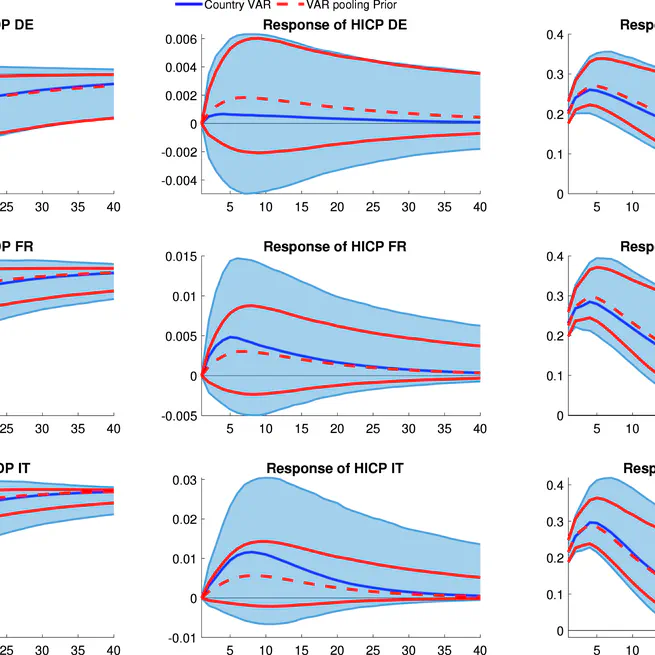
Economic Knock-On Effects of Russia’s Geopolitical Risk on Advanced Economies: A Global VAR Approach
Motivation After decades of deepening globalization, the Russian invasion of Ukraine in February 2022 constitutes a turning point (a “Zeitenwende”) in global economic relations, highlighting how geopolitical risk (GPR) can upset hydrocarbon supply chains and lead to the weaponization of international trade. Geopolitical considerations had already gained importance before 2022 — the US–China trade war and military tensions around the Taiwan Strait and the South China Sea are prime examples — and governments and firms now seek to reduce economic dependencies that could be exploited for geopolitical gain. The response ranges from governmental de-risking initiatives to firms shifting production toward blocs of like-minded countries (“nearshoring” or “friendshoring”), moving from “just in time” to “just in case” supply chains.
29 Oct, 2025
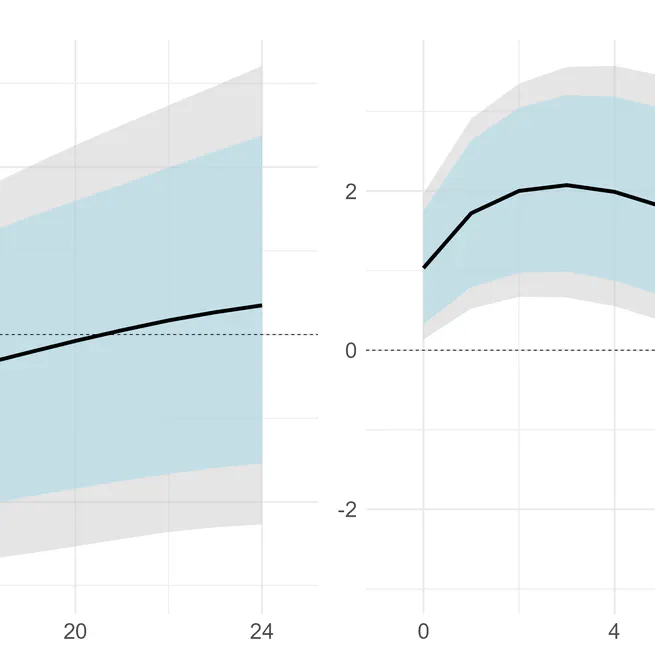
Economic Knock-On Effects of Russia’s Geopolitical Risk on Advanced Economies: A Global VAR Approach
1 Oct, 2024
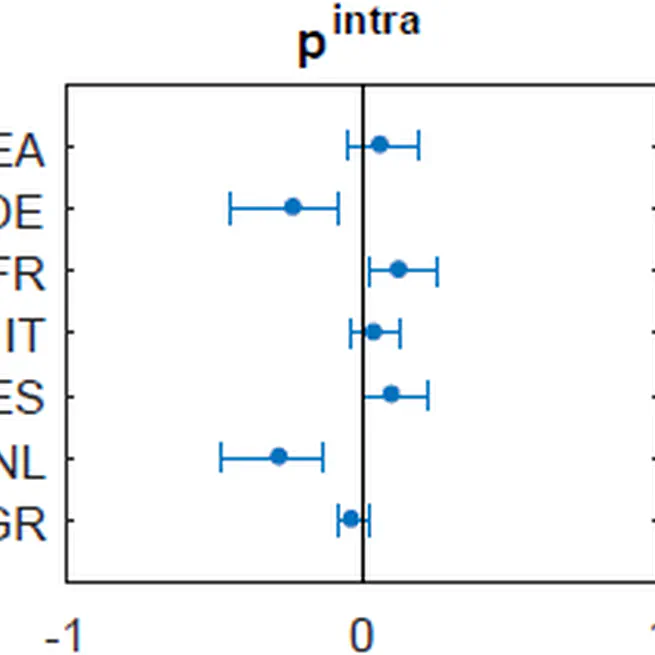
Exchange rate uncertainty and import prices in the euro area
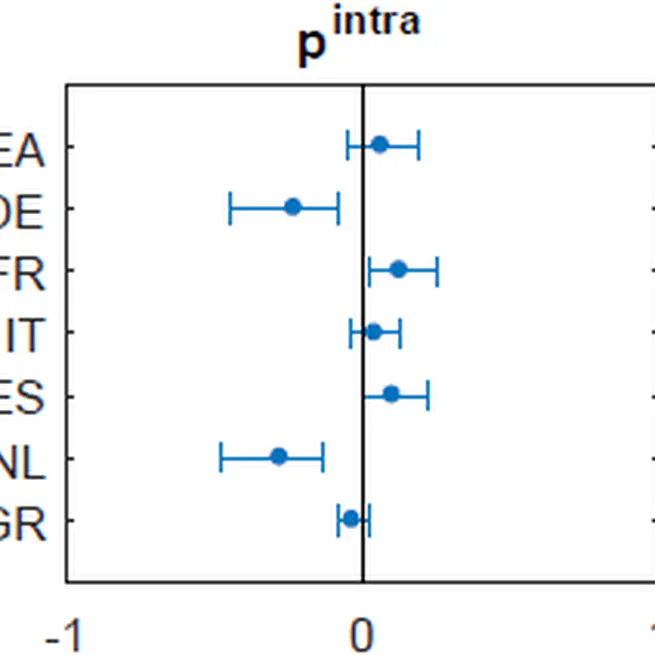
This paper analyses the effects of exchange rate uncertainty on the pricing behaviour of import firms in the euro area. Uncertainty is measured via the volatility of the structural shocks to the exchange rate in a non-linear VAR framework and is an important determinant of import prices. An increase in exchange rate uncertainty is associated with a fall in prices on average, which suggests that the exchange rate risk is borne by the importers. The analysis utilizes a dataset on industrial import prices, disaggregated by origin of imports. Controlling for intra- and extra-euro area trade is important.
16 Aug, 2019
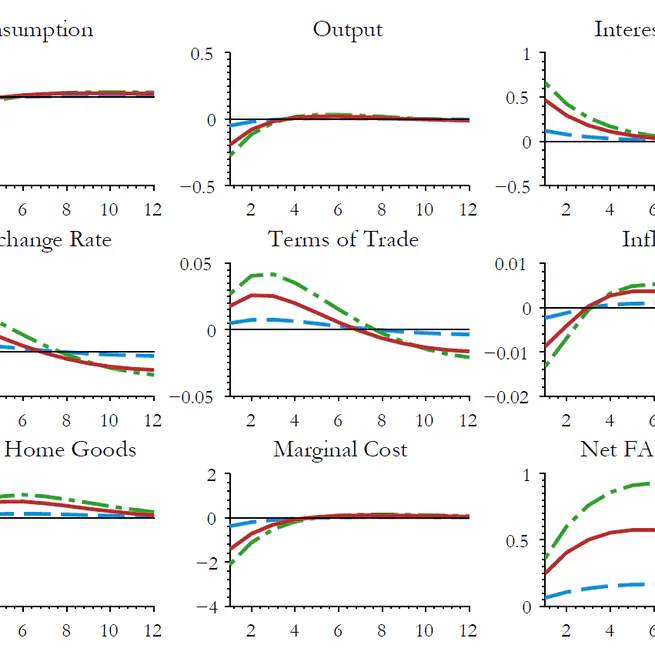
Financial crises and time-varying risk premia in a small open economy: a Markov-switching DSGE model for Estonia
2 May, 2018
The credibility of Hong Kong's currency board system: looking through the prism of MS‐VAR models with time‐varying transition probabilities
6 Jul, 2016