Improving inference and forecasting in VAR models using cross-sectional information
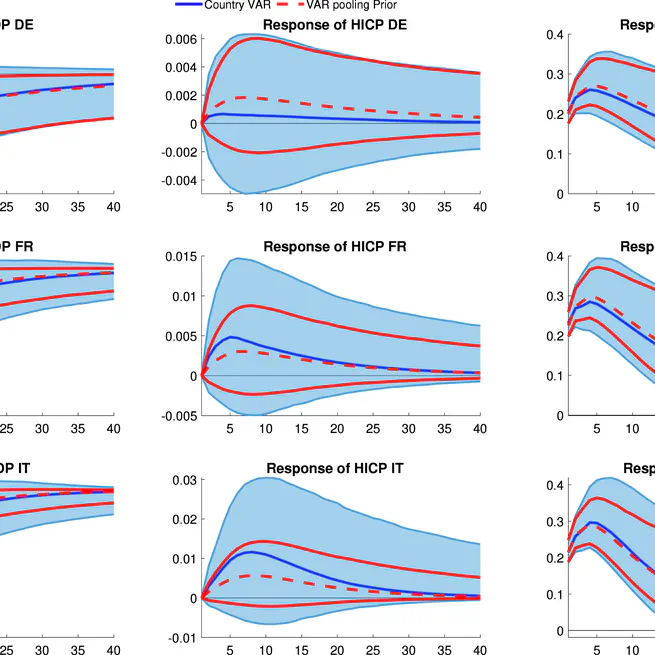
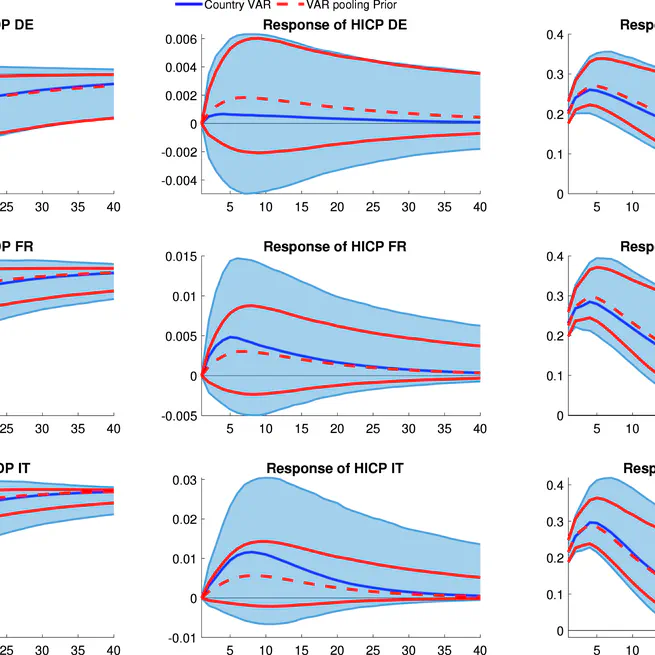
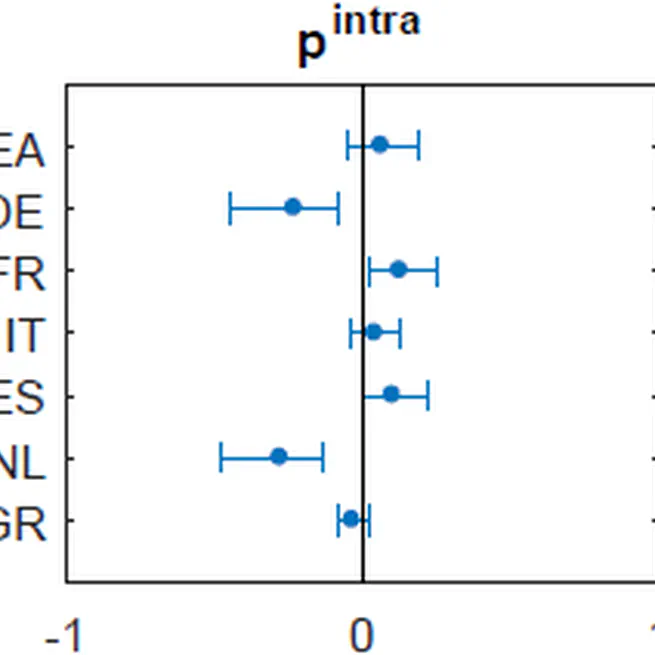
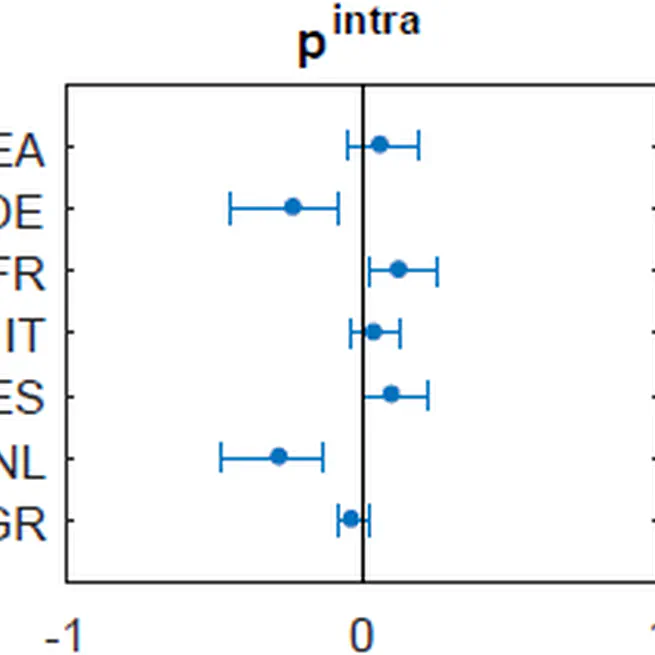
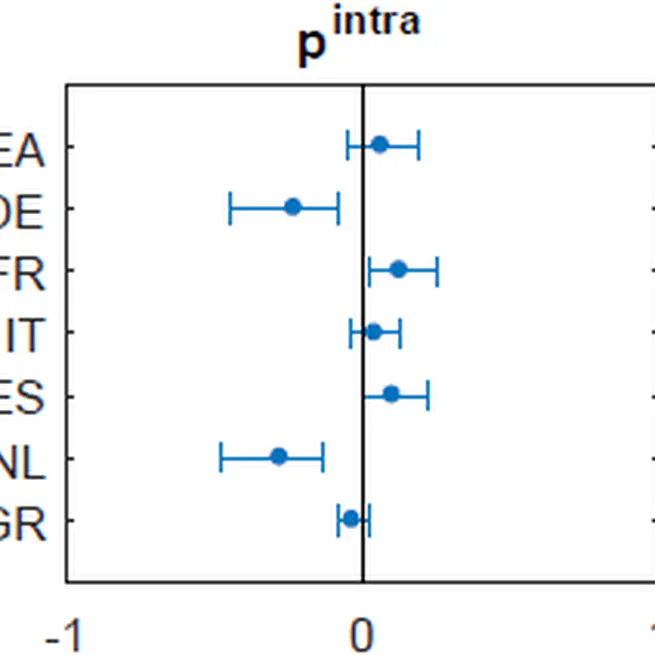
Macroeconomic time series are short, so estimating a individual VARs for many country runs the risk of overfitting and imprecise inference. The standard remedy — the Minnesota prior — shrinks all coefficients towards zero. But this ignores a valuable source of information: many countries exhibit similar dynamics, at least for some variables. Euro area member states, for example, share a common monetary policy, so interest rates and inflation dynamics are strongly integrated, while labour markets and industry structures are very different.
27 Jan, 2026
Economic Knock-On Effects of Russia’s Geopolitical Risk on Advanced Economies: A Global VAR Approach
Motivation After decades of deepening globalization, the Russian invasion of Ukraine in February 2022 constitutes a turning point (a “Zeitenwende”) in global economic relations, highlighting how geopolitical risk (GPR) can upset hydrocarbon supply chains and lead to the weaponization of international trade. Geopolitical considerations had already gained importance before 2022 — the US–China trade war and military tensions around the Taiwan Strait and the South China Sea are prime examples — and governments and firms now seek to reduce economic dependencies that could be exploited for geopolitical gain. The response ranges from governmental de-risking initiatives to firms shifting production toward blocs of like-minded countries (“nearshoring” or “friendshoring”), moving from “just in time” to “just in case” supply chains.
29 Oct, 2025
Monetary policy uncertainty and inflation expectations
27 Jan, 2023
Financial integration or financial fragmentation? A euro area perspective
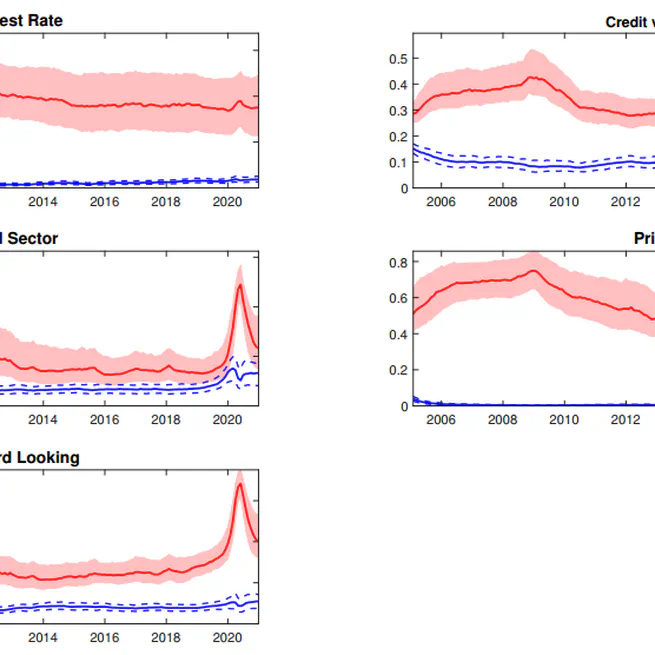
In this article we address the question of how strongly bank lending rates and credit volumes co-move across the euro area. Following the breakdown in the interest rate pass-through across the euro area, we aim to disentangle the relative importance of country-specific and common components in explaining the variance of the macro and financial variables by using a time-varying two-level dynamic factor model. Our results show that a high share is explained by the common component. However, we find a persistent decline in the importance of the common factor in the bank lending rates, indicating the presence of financial fragmentation. Furthermore, we find persistent heterogeneity across member states, specifically those hit hard by the sovereign-debt crisis.
13 May, 2022
The regime-dependent evolution of credibility: a fresh look at Hong Kong's linked exchange rate system
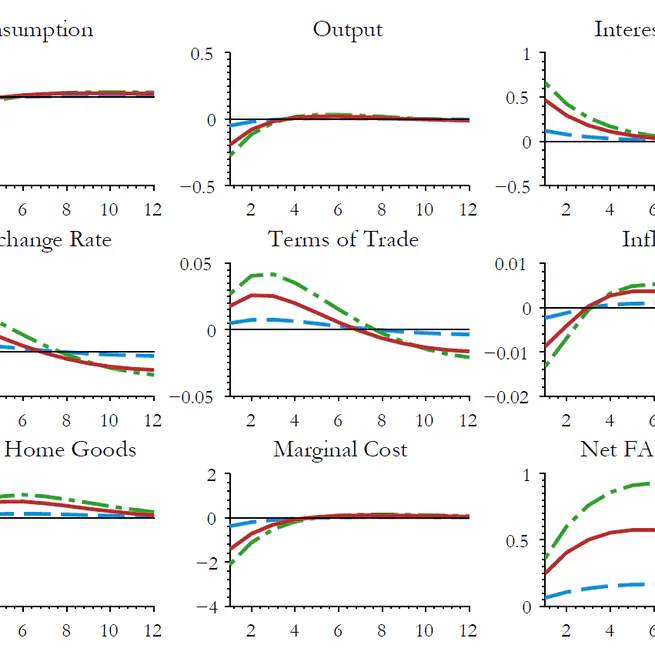
An estimated Markov-switching DSGE modeling framework that allows for parameter shifts across regimes is employed to test the hypothesis of regime-dependent credibility of Hong Kong’s linked exchange rate system. The baseline model distinguishes two regimes with respect to the time-series properties of the risk premium. Regime-dependent impulse responses to macroeconomic shocks reveal substantial differences in spreads. To test the sensitivity of the results, a number of robustness checks are performed. The findings contribute to efforts at modeling exchange rate regime credibility as a nonlinear process with two distinct regimes.
16 Aug, 2019
Exchange rate uncertainty and import prices in the euro area
This paper analyses the effects of exchange rate uncertainty on the pricing behaviour of import firms in the euro area. Uncertainty is measured via the volatility of the structural shocks to the exchange rate in a non-linear VAR framework and is an important determinant of import prices. An increase in exchange rate uncertainty is associated with a fall in prices on average, which suggests that the exchange rate risk is borne by the importers. The analysis utilizes a dataset on industrial import prices, disaggregated by origin of imports. Controlling for intra- and extra-euro area trade is important.
16 Aug, 2019
Financial crises and time-varying risk premia in a small open economy: a Markov-switching DSGE model for Estonia
2 May, 2018
The credibility of Hong Kong's currency board system: looking through the prism of MS‐VAR models with time‐varying transition probabilities
6 Jul, 2016